
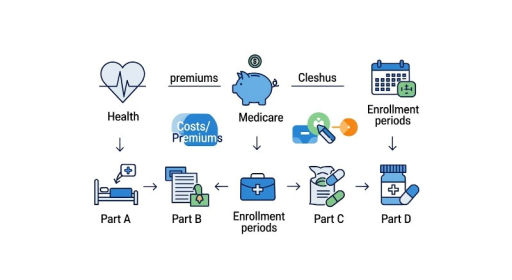
How Medicare Really Works? Medicare Basics Explained
If you’re new to Medicare, you’re not alone. Most people feel overwhelmed the first time they look at it. The good news? Once you know what you’re looking at, Medicare is actually pretty simple. The tricky part is learning the “layout” — and avoiding the common mistakes that can lead to surprise bills, late penalties, or coverage that doesn’t fit your doctors or prescriptions.
That’s exactly why The Medicare Team started this podcast and created this guide: to break Medicare down in plain English, with no pressure. We’ve helped thousands of people across the U.S. navigate Medicare, and our goal is always the same: help you get the best benefits you’re entitled to — in a way that protects your health and your wallet.
Quick answer: What is Medicare?
Medicare is federal health insurance primarily for people age 65 and older, and for certain people under 65 with qualifying disabilities. Medicare is made up of “parts,” and those parts determine what services are covered and how you pay.
Start here: Original Medicare = Part A + Part B
When people say “Original Medicare,” they’re talking about Part A and Part B.
Medicare Part A: Hospital coverage (think “room and board”)
Part A helps cover hospital-related care, such as:
Inpatient hospital stays
Skilled nursing facility care (when medically necessary)
Hospice care
Limited home health services
Medicare Part B: Medical coverage (think “doctor services”)
Part B helps cover medical services and outpatient care, like:
Doctor visits and specialists
Outpatient procedures and surgeries
Preventive care and screenings
Lab work and imaging
Durable medical equipment
A common “surprise” for people is that Part B typically involves monthly premiums and cost-sharing, which is why many people look for additional coverage to help reduce out-of-pocket costs.
Medicare Part C: Medicare Advantage (private plans that “manage” your Medicare)
Part C is Medicare Advantage, and it’s one of the most misunderstood parts of Medicare — mostly because it sounds like it’s “extra.” It’s not. It’s an alternative way to receive your Medicare benefits.
Medicare Advantage is when a private insurance company manages your Medicare benefits instead of the government directly.
Many Medicare Advantage plans may include extra benefits such as:
Dental, vision, and hearing
Fitness/gym memberships
Additional support services (varies by plan/area)
An annual maximum out-of-pocket limit (a big deal for budgeting)
Why do some Medicare Advantage plans have $0 premiums?
This confuses people. But here’s the plain-English version from the episode: the government pays insurance companies to help manage care for Medicare beneficiaries. That’s why some plans can offer $0 plan premiums (you still generally need Part A and Part B active, and Part B has a premium).
The big Medicare Advantage “rule”
Medicare Advantage plans usually have:
Provider networks (a “team of doctors” the plan works with)
Coverage rules that vary by plan
Different copays for services
Prescription coverage often included (but not always)
Medicare Part D: Prescription drug coverage (“D is for drugs”)
Part D covers prescription medications. You can get Part D in one of two main ways:
As a standalone Part D plan (often paired with Original Medicare + a Supplement)
Included inside many Medicare Advantage plans (MAPD)
The key is to avoid guessing. Even if a plan looks great on paper, the real “make or break” for many people is whether it covers your specific medications at an affordable cost.
Medicare Supplement vs Medicare Advantage: Two paths to fill the “gaps”
Original Medicare has gaps. For example, cost-sharing can add up quickly without a cap on what you might pay in a year.
So people generally choose one of two paths:
Path 1: Medicare Supplement (Medigap) + Original Medicare + Part D
A Medicare Supplement plan helps cover the “holes” in Original Medicare. People often like supplements because:
You can typically see any provider who accepts Medicare (no networks)
Costs tend to be more predictable month-to-month
It can be a great fit if you travel often or want simplicity
Common Supplement plans mentioned:
Plan F (not available to people newly eligible after 2020)
Plan G (similar to F, but you pay the Part B deductible)
Plan N (often lower premium, with some copays)
Important tradeoff (from the episode):
Supplements often have higher monthly premiums
Supplements usually don’t include dental
You typically buy Part D separately
Path 2: Medicare Advantage (Part C)
Medicare Advantage can work well if:
You want extra benefits (dental/vision/hearing, etc.)
You prefer lower premiums
You don’t mind networks
You like “pay as you go” copays instead of higher monthly premiums
Bottom line: There is no “best plan.” There’s only what’s best for your situation.
Enrollment periods you must know (and where people make mistakes)
This is where many Medicare problems begin — not because people are careless, but because deadlines aren’t always explained clearly.
Initial Enrollment Period (IEP)
Your IEP is the window around turning 65:
3 months before your 65th birthday month
Your birthday month
3 months after
This is a key time to set up Part A, Part B, and choose how you’ll receive coverage.
Medicare Supplement Open Enrollment (Medigap OEP)
For Supplements, you get a powerful enrollment window:
Starts when you’re 65+ and enrolled in Part B
Lasts 6 months
During this time, you usually have guaranteed issue rights (meaning no medical underwriting in many cases). After that, you may have to answer health questions, and acceptance/pricing can change.
Annual Enrollment Period (AEP)
Every year:
October 15 to December 7
This is your chance to review your plan, especially because plans can change every year (networks, drug coverage, benefits, copays).
A simple Medicare “avoid mistakes” checklist
Here’s what this episode really points toward — how to avoid expensive confusion:
Confirm Part A + Part B are set up correctly
Choose your path: Supplement + Part D or Medicare Advantage
Verify your doctors are in-network (if Advantage)
Verify your medications are covered (Part D/MAPD)
Review your plan every year during AEP
Don’t rely on ads alone — talk to a broker who can compare multiple companies
Why The Medicare Team exists (and how we help)
This episode makes one thing clear: Medicare isn’t hard because you’re not smart — it’s hard because the system isn’t explained well.
The Medicare Team helps you cut through the noise. We do a needs review, check your doctors and prescriptions, and help you compare options available in your area — so you can feel confident you’re choosing what fits your life.
What you get when you work with us:
Medicare explained in plain English
Plan comparisons based on your doctors + medications
Enrollment guidance (so you don’t miss key windows)
Annual reviews as plans change
A real team you can stick with long-term
FAQs
1) What are the 4 parts of Medicare?
Part A (hospital), Part B (medical), Part C (Medicare Advantage), and Part D (prescription drugs).
2) What’s the difference between Medicare Advantage and a Supplement?
A Supplement works with Original Medicare and helps cover out-of-pocket gaps (often with broader provider access). Medicare Advantage is a private plan that manages your Medicare benefits, usually with networks and copays.
3) Do $0 premium Medicare Advantage plans mean Medicare is free?
Not exactly. Some Advantage plans have $0 plan premiums, but many people still pay a Part B premium, and you may have copays when you use services.
4) When should I start talking to someone about Medicare?
A smart time is 3–6 months before turning 65, so you have time to compare options and avoid delays.
5) Do I need a broker, or should I call one insurance company?
A broker can compare multiple companies and plans, which can help you find coverage that fits your doctors, medications, and budget — not just one carrier’s options.
