
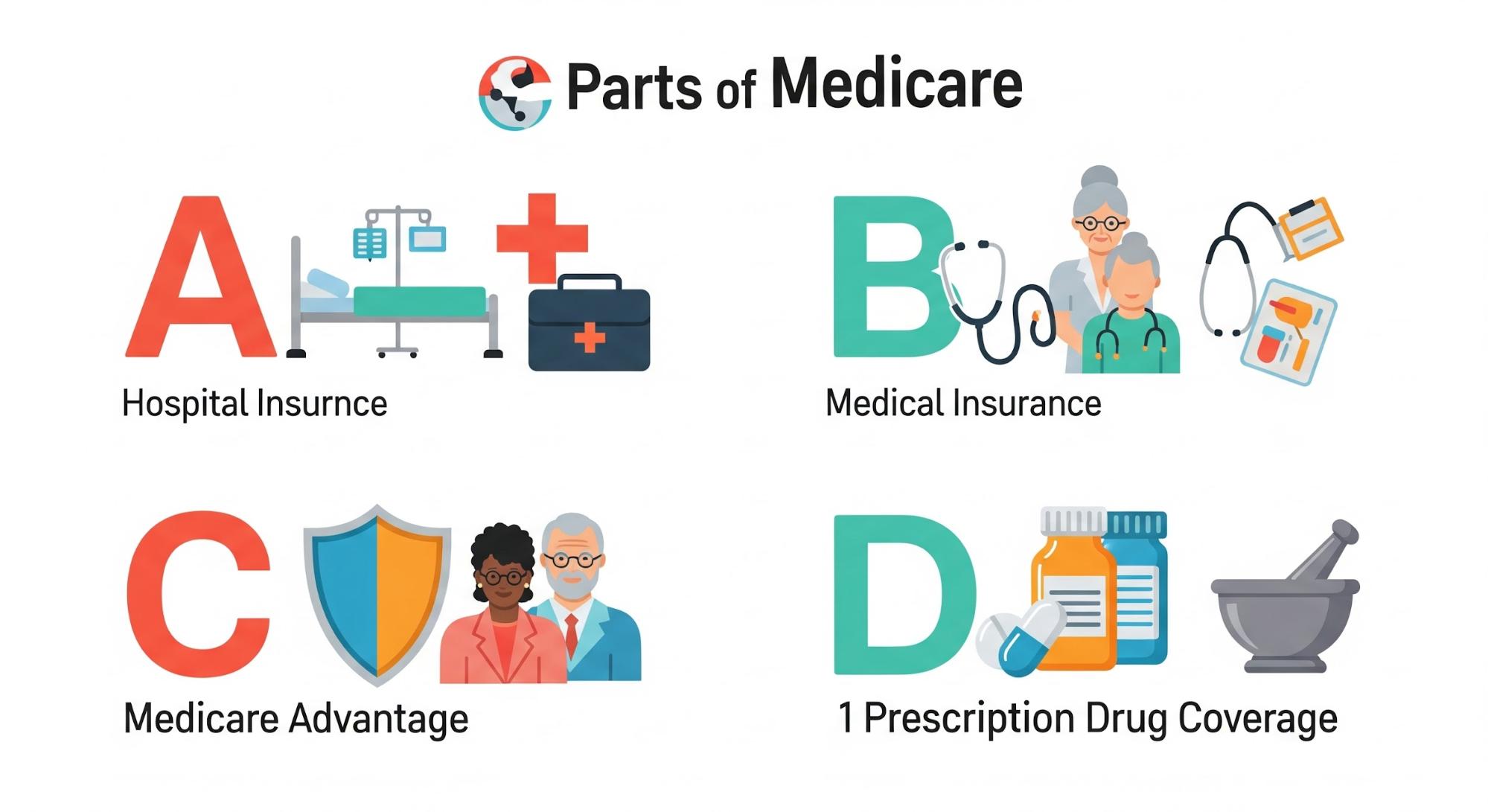
Parts of Medicare Explained: A, B, C & D Made Simple
Understanding the parts of Medicare is one of the most important steps in choosing the right healthcare coverage. Medicare is divided into four parts — A, B, C, and D — and each part covers different services. Knowing how these parts work helps you avoid coverage gaps and unexpected medical costs.
This guide explains each part clearly and shows how they work together.
Medicare Part A – Hospital Insurance
Medicare Part A covers inpatient hospital care and related services, including:
Hospital stays
Skilled nursing facility care (after hospitalization)
Hospice care
Limited home healthcare
Most Americans qualify for premium-free Part A because they paid Medicare taxes while working. Even when Part A is premium-free, there are deductibles and coinsurance costs associated with hospital stays.
Part A is essential coverage, but it does not cover outpatient care or doctor visits.
Medicare Part B – Medical Insurance
Medicare Part B covers outpatient and preventive services such as:
Doctor visits and specialist care
Preventive screenings and vaccines
Lab tests and imaging
Outpatient surgeries
Durable medical equipment
Part B requires a monthly premium and includes a deductible. After meeting the deductible, beneficiaries typically pay 20% coinsurance for covered services.
Because there is no out-of-pocket maximum with Original Medicare, many people choose additional coverage.
Medicare Part C – Medicare Advantage Plans
Medicare Advantage plans are offered by private insurance companies approved by Medicare. These plans bundle Part A and Part B and usually include Part D prescription drug coverage.
Many Medicare Advantage plans offer extra benefits, such as:
Dental care
Vision exams
Hearing aids
Fitness programs
Transportation and OTC allowances
These plans often use provider networks, such as HMOs or PPOs, which may limit which doctors and hospitals you can use.
Medicare Part D – Prescription Drug Coverage
Medicare Part D helps cover prescription medications, including:
Generic drugs
Brand-name medications
Insulin
Vaccines
Each Part D plan has its own drug list, pharmacy network, and cost structure. Choosing the right plan can significantly reduce prescription costs.
Enrolling late without creditable drug coverage may result in a lifetime penalty.
External reference:
https://www.medicare.gov/drug-coverage-part-d
How the Parts of Medicare Work Together
Most people choose one of two coverage combinations:
Part A + Part B + Part D + Medigap
Part A + Part B + Part C (Medicare Advantage)
The best option depends on your doctors, medications, budget, and healthcare preferences.
Common Mistakes When Choosing Medicare Parts
Many people make avoidable mistakes, such as:
Enrolling in Part B late
Choosing a plan without checking prescriptions
Assuming Medicare Advantage works the same as Original Medicare
Overlooking provider networks
Working with a Medicare expert can help you avoid these issues.
How The Medicare Team Helps
The Medicare Team reviews your health needs and explains how each part of Medicare applies to you. We compare plans, explain costs, and guide you toward coverage that fits your life.
Our guidance is always clear, unbiased, and free.
FAQs
1. Do I need all four parts of Medicare?
No. Most people need Parts A and B, then choose either Part D or Part C.
2. What’s the difference between Part C and Medigap?
Medicare Advantage replaces Original Medicare; Medigap supplements it.
