
Medicare and Critical Illness Coverage
What’s Covered and What Isn’t

A critical illness can change a person’s life quickly, often bringing unexpected medical costs and long-term care needs. Conditions such as cancer, heart attack, stroke, and organ failure frequently require hospitalization, ongoing treatment, rehabilitation, and medication. Understanding how Medicare helps cover these costs can make it easier to plan for care and avoid unexpected expenses.
Key Points
Medicare generally does cover treatment for critical illnesses such as heart attacks, strokes, cancer, or organ failure, as long as the services are medically necessary.
Coverage typically comes from Medicare Part A (hospital care) and Medicare Part B (medical services).
If someone has a Medicare Advantage plan, the plan pays for those covered services instead.
Advantage and Medicare Supplement insurance plans are only available from private insurers.
How Medicare Covers Critical Illness
Medicare does not have a single program specifically labeled “critical illness coverage.” Instead, treatment for serious medical conditions is covered through different parts of Medicare when the care is considered medically necessary.
Medicare Part A primarily covers inpatient services. This includes hospital stays, surgeries, and limited care in skilled nursing facilities after a qualifying hospital stay. If someone experiences a major medical event such as a stroke or heart attack, Part A typically pays for the hospitalization and some related inpatient care.
Medicare Part B covers outpatient medical services. This includes doctor visits, outpatient procedures, diagnostic testing, physical therapy, and durable medical equipment. Many treatments and follow-up appointments related to serious illnesses fall under Part B coverage.
If a person has Medicare Advantage (Part C) instead of Original Medicare, the plan provides the same core coverage as Parts A and B but through a private insurance provider. Many Medicare Advantage plans also include additional benefits that may support recovery or ongoing care.
Get up to $1200* back in grocery allowance.
*For individuals with eligible chronic conditions and are eligible to enroll in a Medicare Advantage CSNP plan. Plans depend on both zipcode and eligibility to enroll in a plan.
Prescription Drug Coverage
Treatment for critical illnesses often involves prescription medications. Original Medicare does not fully cover most outpatient prescription drugs. To receive drug coverage, beneficiaries usually need a Medicare Part D plan or a Medicare Advantage plan that includes prescription drug benefits. These plans help cover medications used for managing serious conditions or supporting recovery.
Out-of-Pocket Costs
While Medicare covers many healthcare services, it does not pay for everything. Patients may still be responsible for deductibles, coinsurance, or copayments depending on the services they receive. Extended treatments, specialized therapies, and long-term care needs can sometimes lead to significant out-of-pocket costs.
Some people choose to enroll in a Medicare Supplement (Medigap) plan, which can help cover certain costs that Original Medicare does not fully pay. These policies may reduce the financial burden associated with hospital stays or ongoing treatments.
Additional Critical Illness Insurance
Some individuals also consider critical illness insurance, a type of supplemental coverage offered by private insurers. These policies typically provide a lump-sum payment if a person is diagnosed with a qualifying condition such as cancer, heart attack, or stroke. The funds can be used for medical bills, travel for treatment, rehabilitation, or other expenses related to recovery.
This type of policy does not replace Medicare but may provide financial support during a serious health event.
Planning for Serious Health Conditions
Critical illnesses often require complex medical care and long-term treatment. Medicare provides important coverage for hospital care, medical services, and many treatments associated with these conditions. However, understanding the limits of coverage—and exploring supplemental options when appropriate—can help individuals better prepare for potential healthcare expenses.
Related Articles
Medicare Changes 2026: Everything You Need To Know
Learn the biggest Medicare changes for 2026, including the $2,100 Part D out-of-pocket cap, Part B premium increase, drug tier changes, and how to avoid surprise costs. ...more
All
February 03, 2026•6 min read
How Medicare Really Works? Medicare Basics Explained
Confused about Medicare? Learn Medicare basics in plain English—Parts A, B, C, and D, enrollment periods, and how to choose between Medicare Advantage vs Supplement plans without costly mistakes. ...more
All
February 03, 2026•6 min read
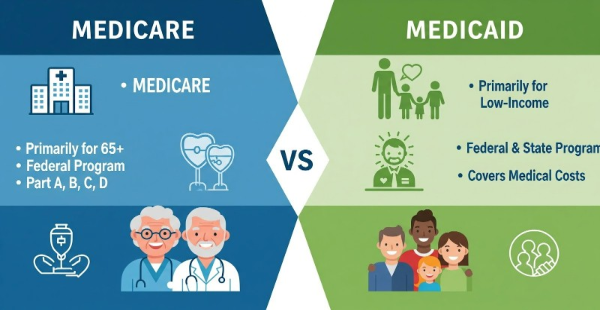
Difference Between Medicare and Medicaid: Eligibility, Costs & Coverage
Learn the difference between Medicare and Medicaid, including eligibility, costs, and coverage, in this clear, side-by-side guide. ...more
All
January 28, 2026•3 min read
What Is Medicaid? Eligibility, Coverage & How It Works
Learn what Medicaid is, who qualifies, what it covers, and how it differs from Medicare in this clear, beginner-friendly guide. ...more
All
January 28, 2026•3 min read

Medicare for Veterans: How Medicare Works With VA Benefits
Learn how Medicare works for veterans, when to enroll, and how VA benefits and Medicare fit together to avoid penalties and coverage gaps. ...more
All
January 28, 2026•4 min read

When to Enroll in Medicare: Deadlines, Periods & Penalties Explained
Learn when to enroll in Medicare, which enrollment period applies to you, and how to avoid late penalties with this clear, beginner-friendly guide. ...more
All
January 22, 2026•3 min read

Some links on this page may take you to Humana non-Medicare product or service pages or to a different website.
This information is provided for educational purposes only. It is not to be used for medical advice, diagnosis or treatment. Consult your healthcare provider if you have questions or concerns.
This communication does not guarantee benefits and does not indicate all services received will be covered by your plan. Please refer to your Evidence of Coverage or call Customer Service at the number on the back of your Humana ID card to confirm that the service will be covered by your plan.
Medicare Supplement insurance is available to those age 65 and older enrolled in Medicare Parts A and B and, in some states, to those under age 65 eligible for Medicare due to disability or end-stage renal disease.
Medicare Supplement insurance plans are not connected with or endorsed by the U.S. government or the federal Medicare program.
Medicare Supplement insurance plans are regulated by and subject to state requirements.
COMPANY
CUSTOMER CARE
LEGAL
SOCIALS
Copyright 2026. Medicare Team. All Rights Reserved.
This site is not a part of the Facebook™ website or Facebook™ Inc. Additionally, this site is NOT endorsed by Facebook™ in any way. FACEBOOK™ is a trademark of FACEBOOK™, Inc.
Medicare Team is not affiliated with Medicare, the U.S. government, or any state or federal agency. This is an advertisement. Callers will be connected with a licensed insurance agent who may offer Medicare Advantage plans (HMO, PPO, PFFS), Medicare Supplement, and stand-alone prescription drug plans (PDP). We do not offer every plan available in your area. Currently, we represent 6 organizations which offer 2,352 products. Please contact Medicare.gov, 1-800-MEDICARE, or your local State Health Insurance Program (SHIP) to get information on all of your options. Enrollment is subject to the plan’s contract renewal.